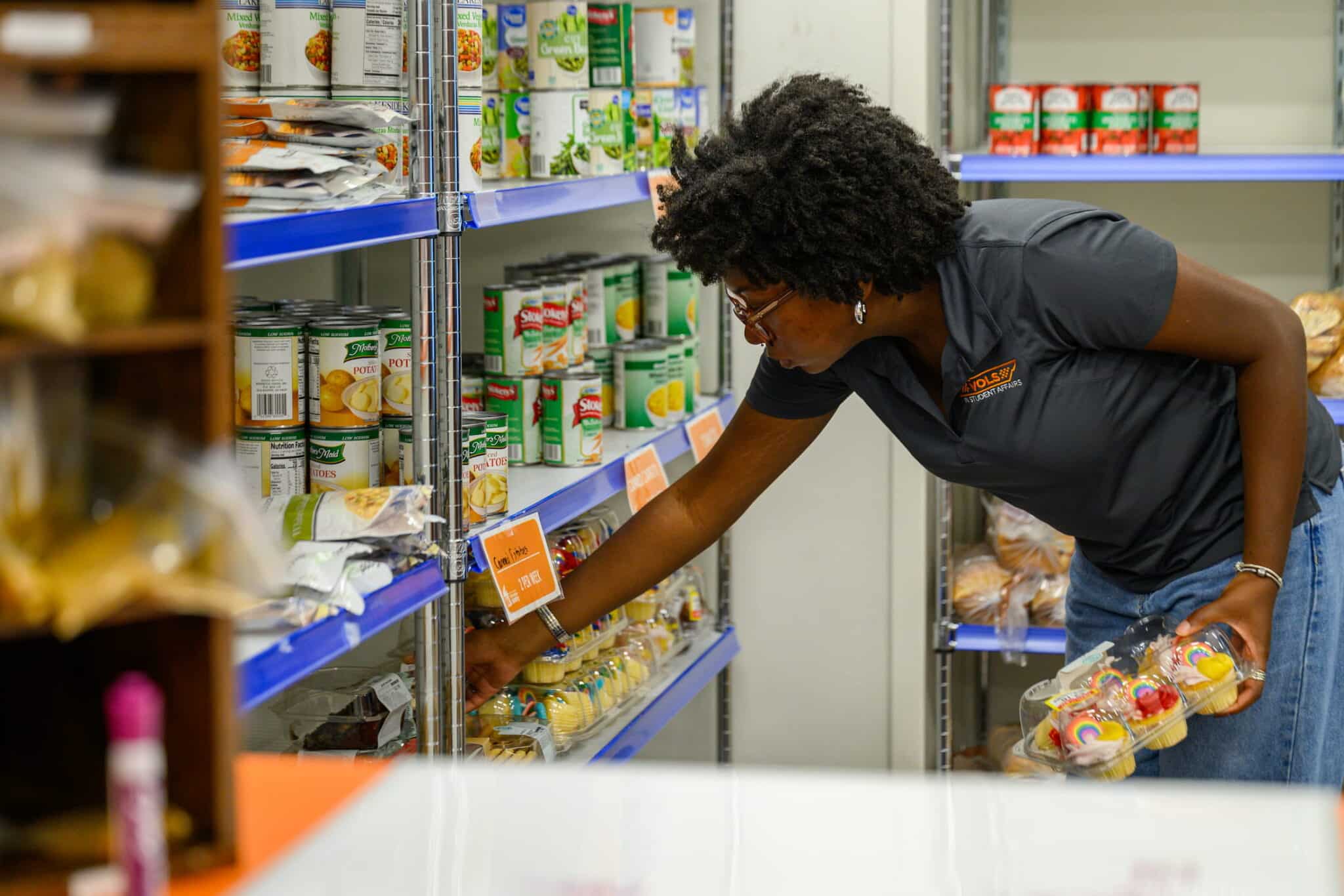
In November 2020, the Big Orange Pantry got its start on UT’s campus. Launching months into a global pandemic, it was a simple open-air operation set up outside of Greve Hall once a week. Student volunteers would help bag non-perishable foods to give out to the many students facing food insecurity.
“We knew that students often face some kind of food insecurity, and we saw an opportunity to fill that need,” says Associate Dean of Students Joe Pierce.
Now, five years later, what started with an essential seed investment from Donnie (’80) and Terry (’80) Smith and a partnership with Second Harvest Food Bank, has grown into a fully staffed, multi-location pantry that is helping students day in and day out.
Created in response to college students’ food insecurity, the pantry is now housed under the Center for Basic Needs and provides non-perishable and fresh foods, along with basic hygiene items and other essentials, at no cost to students.
“The idea is to have a safety net for students and make things equitable,” says Pierce. “Providing them access to food helps foster a sense of belonging and says that the university cares about you.”
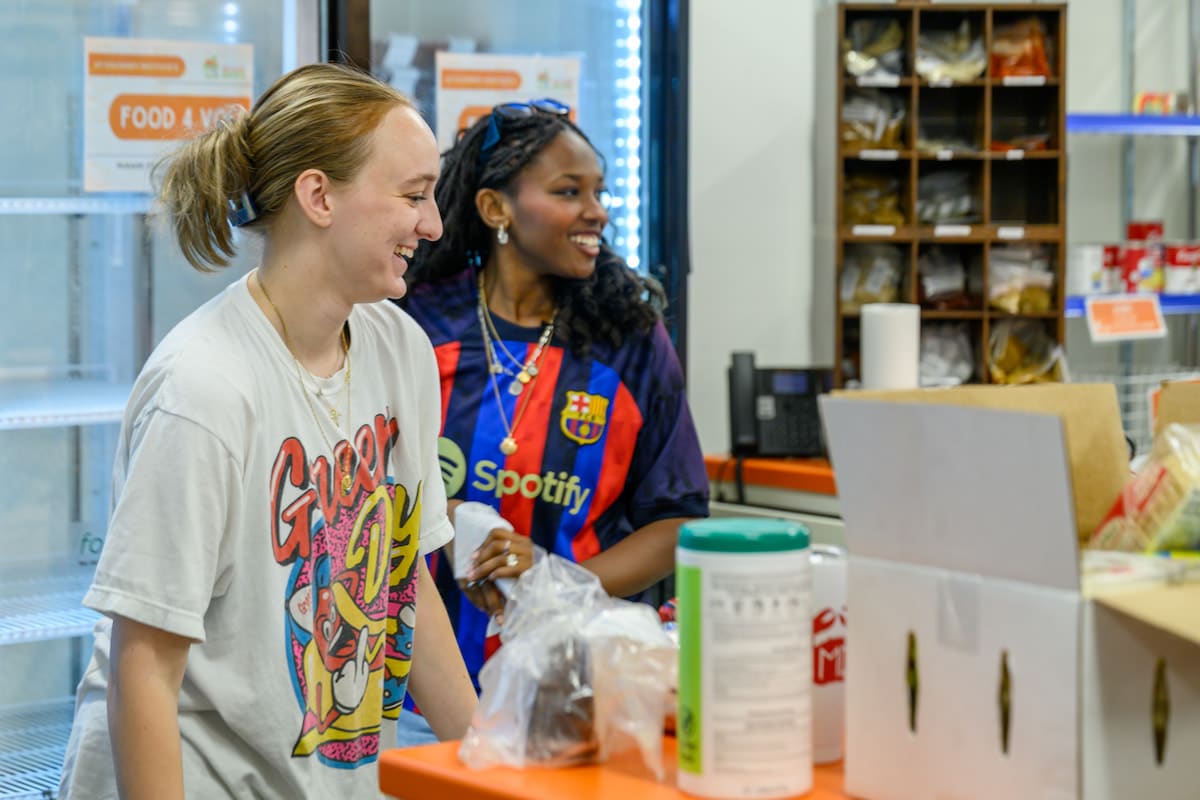
The Big Orange Pantry has seen tremendous growth since 2020. It’s gone from reliance on student volunteers to 10 paid staff members, including three full-time employees. No longer a weekly open-air pantry, it’s now a consistent, shopper-centered location in the Student Union.
The pantry, along with the rest of the Center for Basic Needs—which has not yet had its own physical location—has plans to relocate to the former Presidential Court Building, near most of campus housing and closer to the students who utilize the center’s resources.
Additionally, the Big Orange Pantry has five pocket pantries across campus—in fact, it opened its fifth one in its fifth year.
The pantry has seen such growth thanks to generous donors, many of whom are students, faculty, and staff. During the most recent Big Orange Family Campaign, the pantry was one of the top funds faculty and staff chose to support. Increasingly, the Big Orange Pantry sees student donors, whether they’re users of the program or not, giving back to make food accessible to their peers.
“Each year that the pantry has been open, we’ve seen that everything from word of mouth to the support of donors has really helped to grow the space,” says Coordinator for Basic Needs Operations Brianna Smith.
You can see that growth in the increased number of pocket pantries or the growing number of volunteers, but it’s especially evident in the tangible impact it has on students.
Based on a 2023-24 assessment project by the Center for Basic Needs, the Office of Institutional Research and Strategic Analysis, and Student Life Effectiveness, students who used the Big Orange Pantry were retained and graduated at higher rates than students who did not use the pantry.
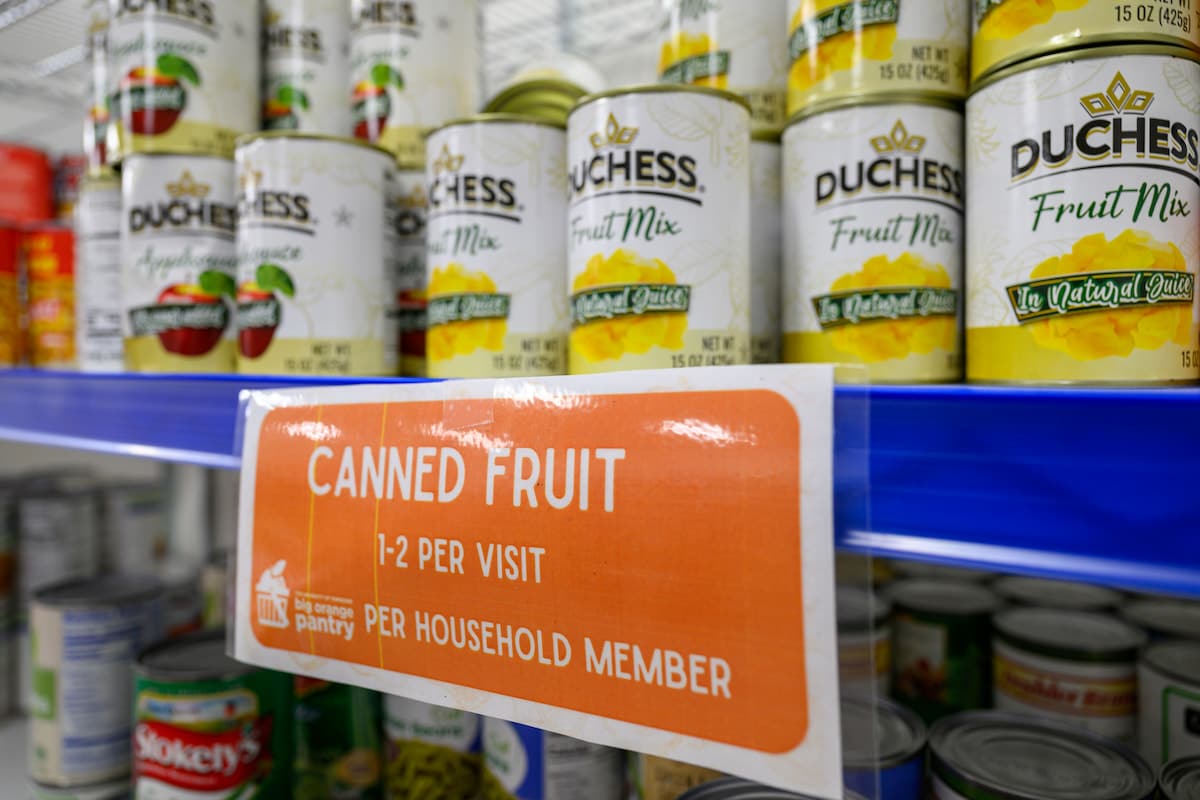
The pantry helps remove a barrier to academic success by giving students the food they need and contributes to key indicators of university success like UT’s record 92.4 percent first-year retention rate.
That impact doesn’t stop at the sheer numbers. For Smith, she sees the way the pantry helps students in the relationships she forms.
“We’ve had students with us now for years, and they will say, ‘Hey, I’m graduating, do you want to come to my ceremony?’” says Smith. “Or they say, ‘Hey, I finally passed that really hard class—thank you for lunch.’
“Knowing that what my team does—just checking in on a student and giving them lunch—gets students through their college experiences is humbling and incredibly rewarding.”
Not only does the Big Orange Pantry meet students’ immediate food needs, but it also connects them to other resources provided by the Center for Basic Needs.
“The Big Orange Pantry is such a wonderful first touch point for so many students, and we’ve really gone from just a food pantry to an entire Center for Basic Needs,” says Smith.
That pandemic-era, open-air pantry was just the start. Now the Center for Basic Needs includes Smokey’s Closet, where students can get free professional clothing, an emergency fund for students’ basic needs, and a slew of other services. The center also offers one-on-one basic needs consultations to provide personalized support to students, helping connect them to both university and campus resources for their unique situations.
As its impact and footprint expands, the center retains the same mission the pantry had when it was outside of Greve Hall—to give students the basics they need to succeed.
“That food pantry five years ago was just the beginning of a story of how resources, donors, students, the leadership of our division, and all of those amazing connections got us where we are today,” says Smith.
Learn More About Big Orange Pantry