Reliable Access to Meals Fuels Students

Reliable Access to Meals Fuels Students
In college, a trip to the dining hall can do more than satisfy hunger—it can set a student up for success in several ways. University of Tennessee, Knoxville, dining halls provide hot meals to hungry students, while fostering community, well-being, mental health, and overall success.
Dining halls are a hub for support for college students, but having a meal plan comes with a cost that not all students can afford. To make food on campus more accessible, the Center for Basic Needs provides students with meal plan scholarships in the form of either 21 meals a week or five meals a week.
Now, one such meal plan scholarship fund is on its way to being fully endowed thanks to Jason (’92, ’96) and Suzie (’97) Epstein. With the Epstein Family Meal Plan Scholarship Endowment, the Epsteins are ensuring long-term, reliable support for students on campus who face food insecurity.
“This program relies on private gift support, so having an endowment provides funding we can count on every year,” says Associate Dean of Students Joe Pierce.
The Center for Basic Needs was established to provide comprehensive resources to help meet students’ basic needs. Offering everything from access to free professional clothing to free groceries to discounted travel across the state, the center has seen tremendous growth in recent years, and the endowed scholarship is just one example of that momentum.
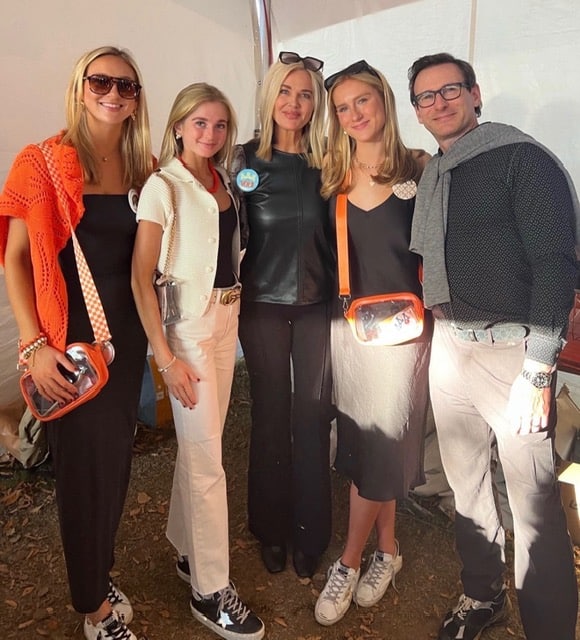
A meal plan scholarship fund is on its way to being fully endowed thanks to the Epstein family.
The Impact of a Meal
Millions of college students across the country face food insecurity, according to the US Government Accountability Office. Having resources that address those needs at UT helps students focus on getting their degree without the added stress of worrying about whether they can access food. Initiatives by the Center for Basic Needs have also been shown to have a track record of helping retain and graduate students at higher rates.
“I think many people are unaware of how many students don’t know where their next meal is going to come from,” says Suzie Epstein. “Having to think about that can make it so much harder to show up for class or take exams. This scholarship removes that barrier and does so much to help students succeed and eventually graduate.”
In her day-to-day work as coordinator for basic needs operations, Brianna Smith sees firsthand the way the Center for Basic Needs and the meal plan scholarship have made success more possible for students.
“I’ve had that one-on-one connection with students who receive the scholarship. They’ll say, ‘Thank you so much, I’ve been able to have two or three meals a day this year, which is something I didn’t have last year,’” says Smith. “Access to proper nutrition is something a lot of us take for granted.”
“Because of the scholarship, these students have the opportunity to grab a bagel for breakfast before an exam or get lunch with their friends on campus, and those everyday moments make a lasting difference in their lives.”
A Legacy of Support
For the Epsteins, giving students that opportunity was an instant ‘yes.’ Suzie Epstein’s late mother was an educator who gave food to many of her students to make sure no one in her classroom went unfed, and that’s a legacy they want to carry on.
“If her students were hungry or thirsty or tired or had any problems, she made sure that they had what they needed,” says Suzie Epstein. “Her students have contacted me in the past telling me how much she did for them and how much her support inspired them, and we hope this endowment can similarly give students what they need.”
Because of the scholarship, these students have the opportunity to grab a bagel for breakfast before an exam or get lunch with their friends on campus, and those everyday moments make a lasting difference in their lives.”
Brianna Smith
Coordinator for Basic Needs Operations
Each year, the Center for Basic Needs receives more than 100 applications for a meal plan scholarship and has to narrow those down to less than 20 recipients based on current funding. Outside of student wages and staff salaries, the center is entirely donor funded.
“An endowment is there forever and allows us to grow and expand with the knowledge that we’re going to have revenue to support that growth,” says Pierce.
The endowed support from the Epsteins means the center and future generations of scholarship recipients can count on a steady supply of meals in perpetuity, ensuring a legacy of healthy, successful Vols lighting the way at UT and wherever their career paths lead.