Facilities make new discoveries possible
By Abby Ann Ramsey Peters (’24)
When Baby Seven—born two months early—arrived at the Charles and Julie Wharton Animal Hospital’s Equine Performance and Rehabilitation Center at the UT College of Veterinary Medicine (UTCVM), it was all hands on deck.
Specialists in physical rehabilitation, podiatry, anesthesia, medicine, and surgery came together to give Seven the best care possible, as people across the world tuned into his journey. Seven ultimately passed away at 18 months old, but the legacy he left at UT remains.
Third-year veterinary student Davis Dunn got to help while Seven recovered from his last surgery. The experience showcased just how much the medical teams at UTCVM are committed to giving their all for each and every animal.
“The treatment Seven received is a testament to the attention given to each horse that comes to UT. The facilities make that level of care possible.”
Clinical Assistant Professor of Equine Rehabilitation Tena Ursini
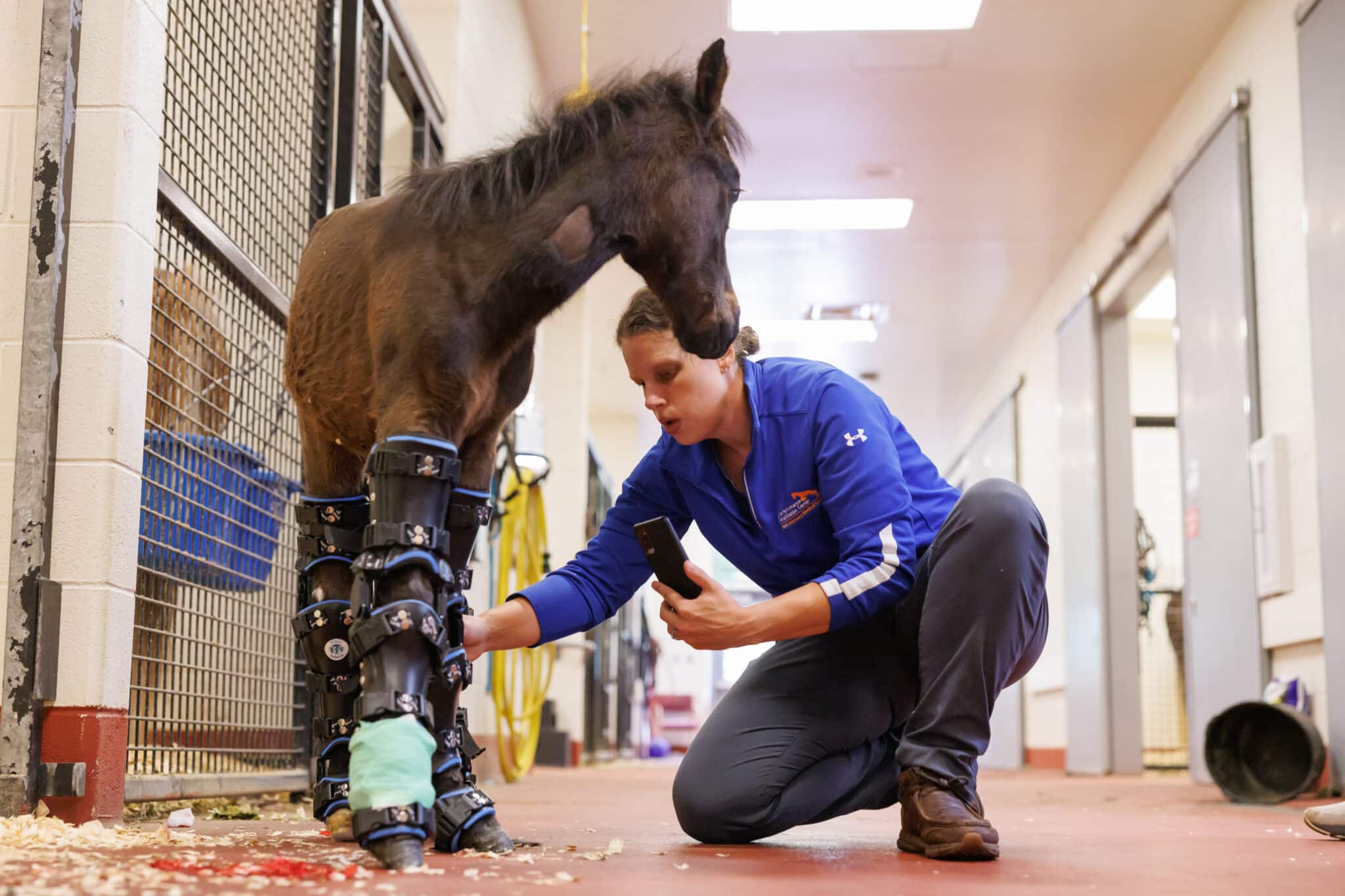
In 2013, the Equine Performance and Rehabilitation Center at UTCVM opened, and its facilities have seen impressive growth with the help of Charles Wharton (’65) and his late wife, Julie Wharton. The Equine Intensive Care Unit is named for the Whartons, and in 2022, the entire Large Animal Hospital became the Charles and Julie Wharton Large Animal Hospital.
It was the Whartons’ contributions—with the vision of Steve Adair, emeritus professor in UTCVM—that helped bring to life the Equine Performance and Rehabilitation Center with the nation’s first university-based Equine Rehabilitation Certification Program.
The center has provided unparalleled facilities that make caring for cases like Baby Seven possible and give students like Dunn opportunities to leave UTCVM with the skillset and research opportunities they need to offer quality veterinary care.
“Words cannot express the appreciation that I have for Charles and his continued support of our mission to improve the lives of animals, those that care for them, and the communities we support,” says Paul Plummer, dean of the UT College of Veterinary Medicine. “From capital-level support of the large animal hospital, to financially supporting professional development, to ensuring our hospital staff have a special evening of appreciation, their generosity has made a difference.”
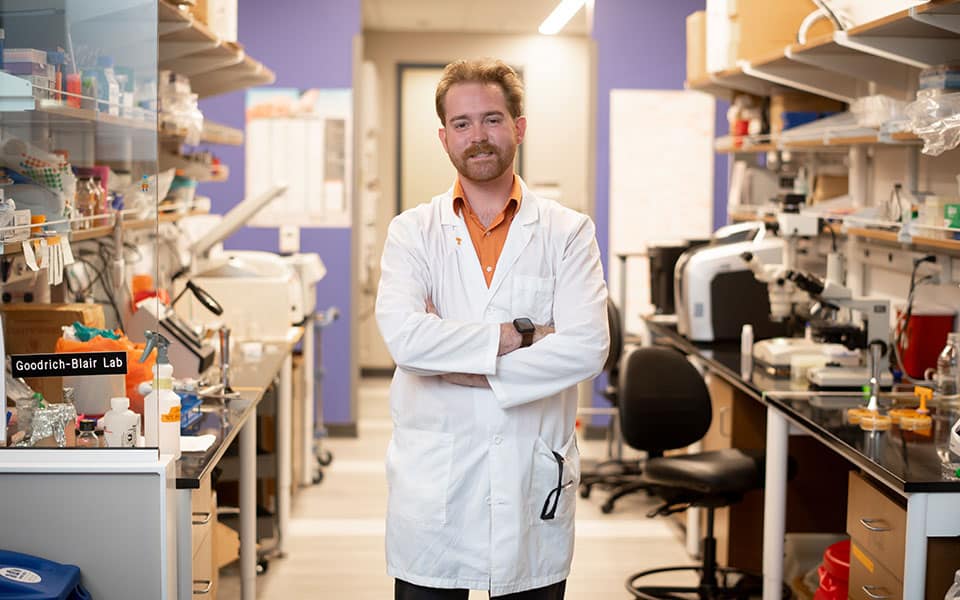
I want to be in the field, hearing people’s stories, so I can incorporate that into what I’m doing in the lab.”
Tyler Myers
“If we didn’t have the Whartons or donors like them, then we wouldn’t have the facilities we have. We wouldn’t be on the cutting edge of regenerative medicine, and we wouldn’t be putting out incredible veterinarians like we do.”
Davis Dunn
Doctor of Veterinary Medicine, Class of 2027
Discoveries That Change Practice
In the Equine Performance and Rehabilitation Center, faculty and students have access to an underwater treadmill, a lameness area, on-site podiatry center for therapeutic shoeing, motion-capture cameras, climate-controlled spaces, and an indoor arena with synthetic footing and tools that give practitioners a wide range of therapeutic options. The center’s resources fuel research like Dunn’s.
With the help of Ursini, Dunn is working on a project evaluating the efficacy of balance pads in horse rehabilitation. These square, foam pads are made for horses to stand on with the intent of improving postural control and muscle mass.
While they’ve become popular, vets don’t have the research to validate what happens to the animal and whether it’s a successful treatment method.
Under Ursini’s guidance, Dunn is looking at the postural control and muscle activity of horses using these balance pads to determine the pads’ impact. Dunn is on a mission to accurately inform his clients so that animals get the best care possible.
“Studies like this inform us so that we can inform our clients,” says Dunn.
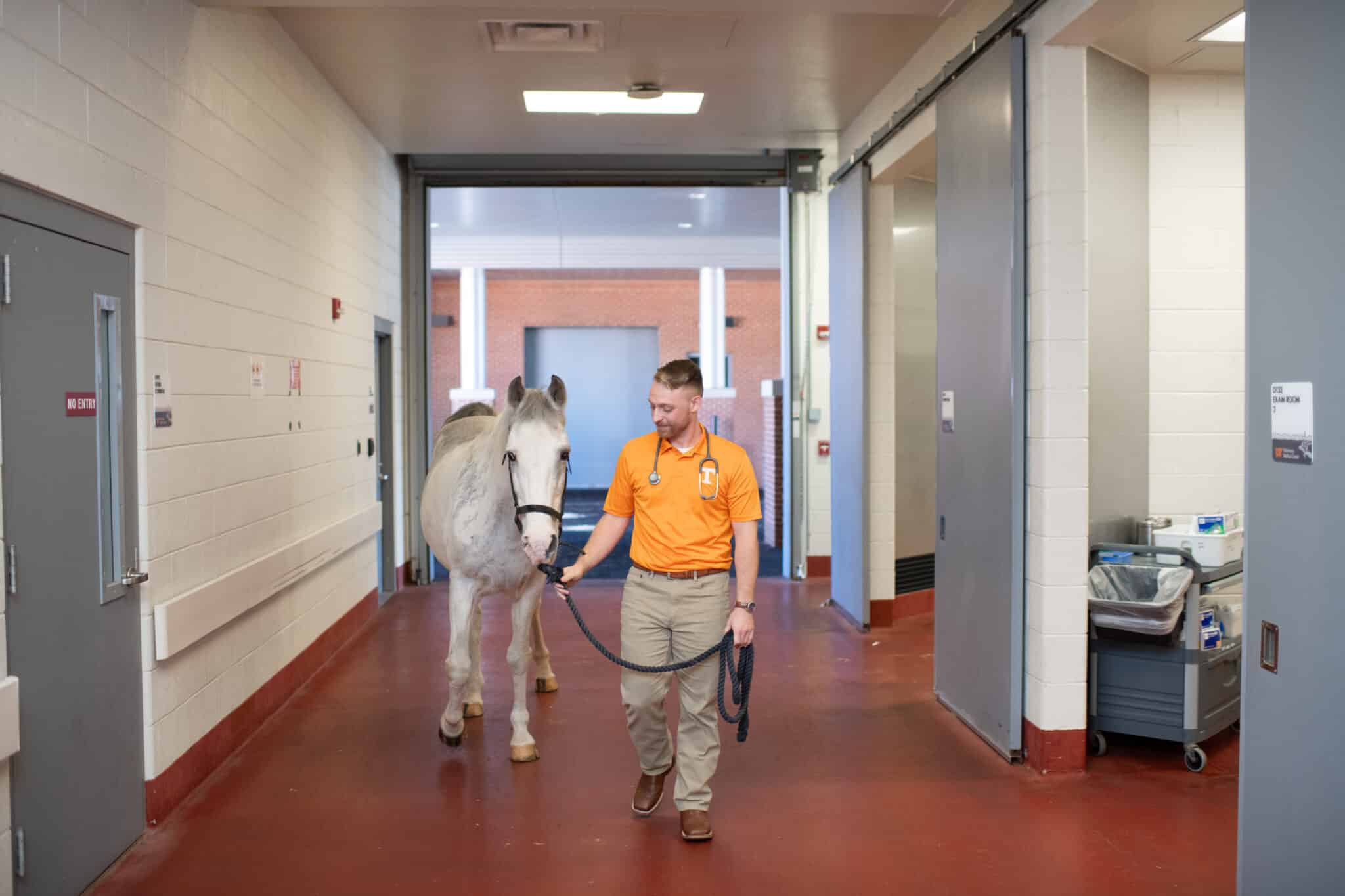


Because equine rehabilitation is an emerging field, there are limited studies on the effectiveness of various rehabilitation methods. But Ursini has helped lead UTCVM students like Dunn to find answers that will benefit horses and their owners.
“At an academic veterinary medical hospital, we have the opportunity to gain knowledge for the greater good while caring for patients in a center that benefits from high-quality facilities,” says Ursini. “The process of discovery happens in all the big and small moments of the staff’s day.”
That discovery process feeds into Dunn’s experience as a student as well. One moment that stood out to him in his time was interacting with and forming relationships with horses that were part of the teaching herd.
“You get to build a connection with these horses, and it’s a partnership as you’re trying to figure something out for the greater good,” says Dunn.
“What’s unique about UTCVM is the opportunity to do research while caring for patients in a center that offers high-quality facilities. The research happens in all the big and small moments of the staff’s day.”
Clinical Assistant Professor of Equine Rehabilitation Tena Ursini
Faculty light the way for students
Getting to work with Ursini is a highlight of Dunn’s experience at UTCVM. This kind of research was completely new to Dunn and having Ursini guide him through it has been a huge help.
“At first, I was definitely intimidated because I didn’t know what I was doing,” says Dunn. “But she just showed me the way. She and her residents have taught me a lot about research, about clinical practice, and about life.”
Ursini’s mentorship wouldn’t be possible for Dunn had Ursini not come to UT in 2015 for her residency in equine sports medicine and rehabilitation. She was one of the program’s first residents, coming to Knoxville just two years after the center was built.
“None of my career at UT would have been possible without the Whartons,” says Ursini. “If I hadn’t come here for my residency, I wouldn’t have been here for Baby Seven.”
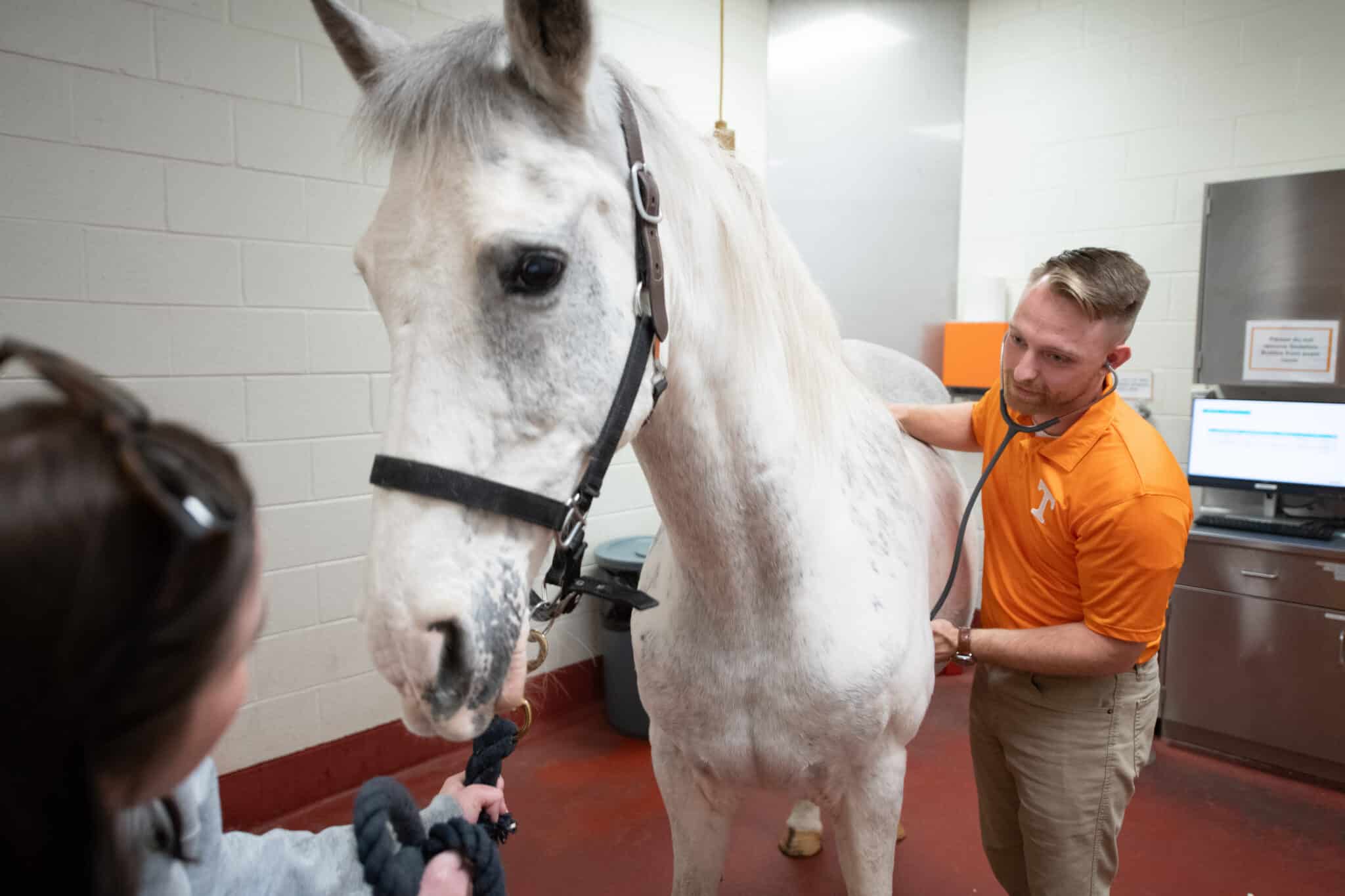
The Equine Performance and Rehabilitation Center’s resources put UT at the forefront of new and exciting research. It also gives students like Dunn the resources and mentors they need to take their knowledge to the clients in Tennessee who need it most.
After he graduates, Dunn plans to work in Cleveland, Tennessee—near his hometown—in mixed animal medicine. While he initially planned to work in small animal medicine, his experiences at UT and with the Wharton Large Animal Hospital have inspired him to take on work that will include dogs, cats, horses, goats, and lots of animals in between.
“If we didn’t have the Whartons or donors like them, then we wouldn’t have the facilities we have,” says Dunn. “We wouldn’t be on the cutting edge of regenerative medicine, and we wouldn’t be putting out incredible veterinarians like we do.”